ML in Finance: A Decision System, Not a Forecasting Contest
Why financial ML must be designed around decisions, uncertainty, and controls—not a single accuracy score.
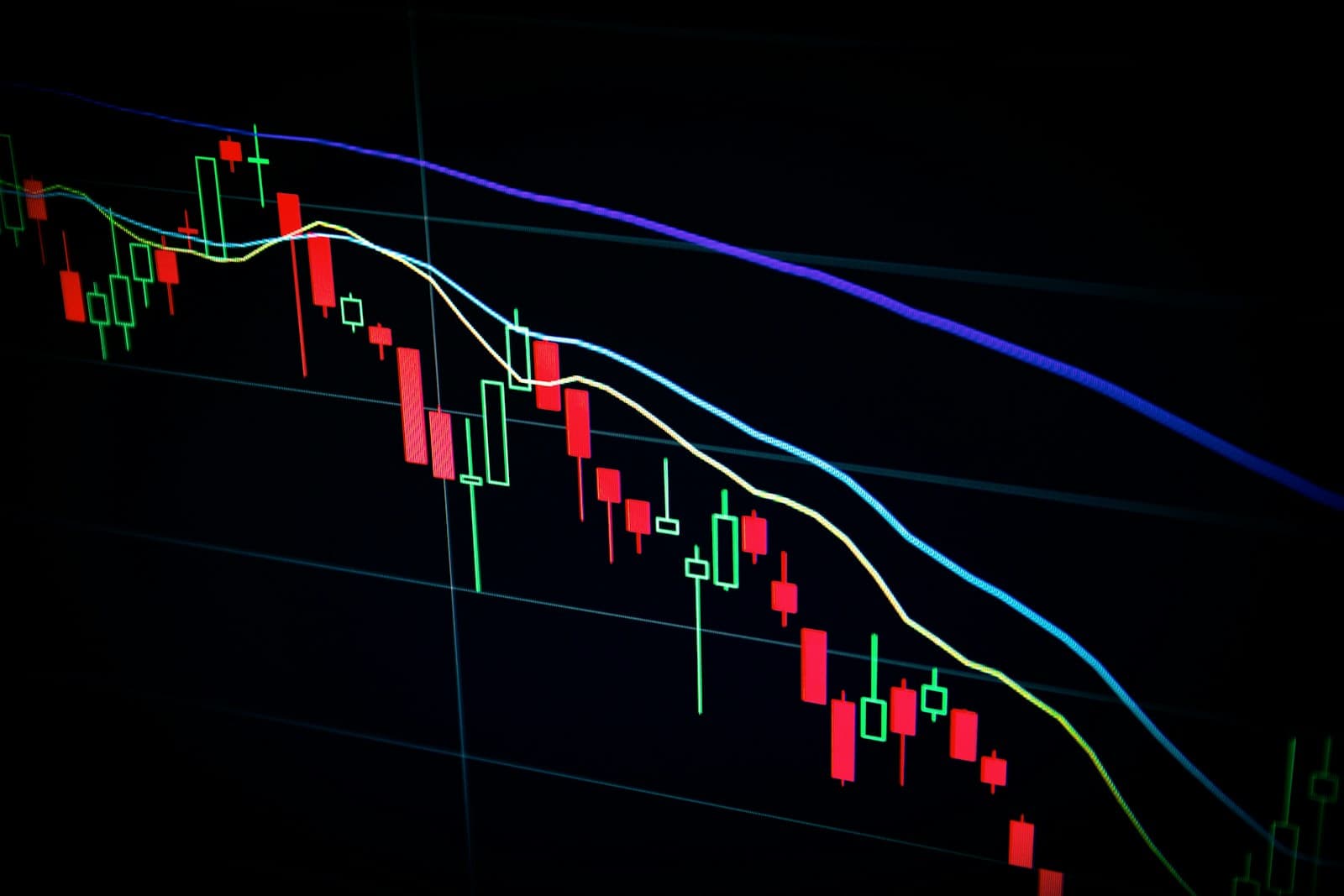
Machine learning in finance is most useful when it improves a bounded decision: whether to investigate a transaction, how to route an order, or which cases deserve a reviewer’s attention. Treating it as a contest to predict tomorrow’s price confuses an interesting model output with a deployable system. The finance literature spans trading, credit, portfolio allocation, fraud, and derivatives, each with different labels, latency limits, and costs of error (Ozbayoglu et al.).
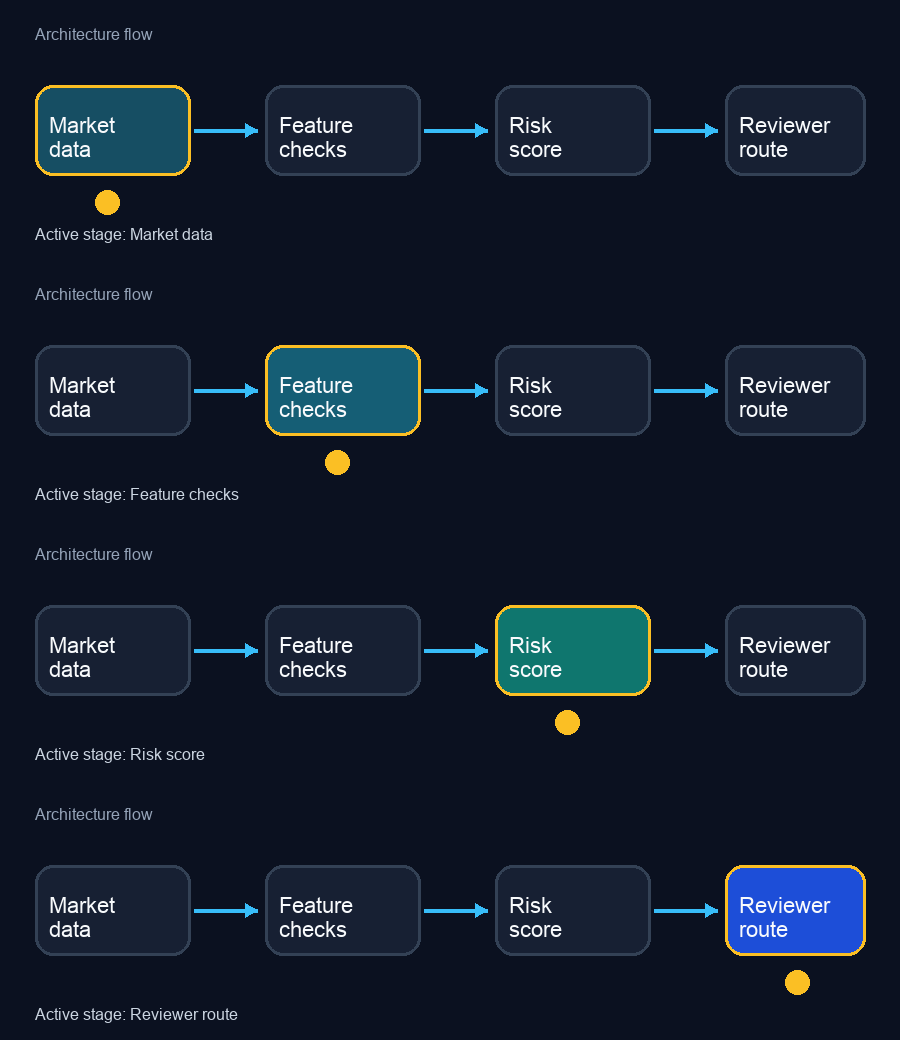
I start with the decision and write down the asymmetry. A false negative in fraud can be expensive; a false positive can frustrate a legitimate customer. A model threshold is therefore a policy choice, not merely a mathematical setting. It should be paired with abstention rules, a human route for uncertain cases, and an evidence trail that explains the inputs available at decision time.
The practical discipline is temporal. Features must be point-in-time correct, splits must respect chronology, and back-tests must include costs, delays, and turnover. FinRL’s emphasis on a complete reinforcement-learning pipeline is a useful reminder that environment design, constraints, and evaluation can matter as much as the learner itself (Liu et al.).
My takeaway is simple: finance teams should fund monitoring and governance alongside model development. A modest model with stable inputs, clear escalation paths, and drift checks can be more valuable than a clever model whose performance cannot be audited after market conditions change.
A useful implementation artifact is a decision inventory. For every model-assisted action, it identifies the decision owner, the input snapshot, the prediction horizon, the downstream action, and the error that matters most. This prevents a team from mixing a fraud-ranking model, a credit policy, and a trading signal into one vague definition of ‘performance.’
The monitoring plan should be designed before the model is released. I would track input availability, distribution shift, calibration, threshold crossing rates, reviewer overrides, and the time taken to resolve exceptions. A prediction score is only one sensor in a larger operating system; the surrounding data and people determine whether it remains useful.
Works Cited
- Ozbayoglu, Murat, et al. “Deep Learning for Financial Applications: A Survey.” arXiv, 2020.
- Liu, Xiao-Yang, et al. “FinRL: A Deep Reinforcement Learning Library for Automated Stock Trading.” arXiv, 2020.
- Tabassi, Elham. Artificial Intelligence Risk Management Framework (AI RMF 1.0). National Institute of Standards and Technology, 2023.